There is nothing quite as delightful as cuddling up with a clean, pleasant-smelling dog after an invigorating outdoor excursion. Yet for countless pet parents, knowing precisely how frequently to lather up their companion remains a perplexing puzzle. Over-bathing strips away crucial natural dermal lipids, producing chronic flaking, pruritus (itching), and vulnerable skin barriers.
Human skin and canine skin possess dramatically distinct biological characteristics. While adult humans have an epidermis that is 10 to 15 cell layers thick with an acidic pH balance of roughly 5.5, canine epidermis is extraordinarily delicate—measuring merely 3 to 5 cell layers deep with a neutral to slightly alkaline pH of 6.5 to 7.5. What feels mild to human skin can severely irritate a dog’s acid mantle barrier.
🐾 The Golden Bathing Principle:
Never utilize human shampoos, baby soaps, or dish detergents on dogs. Human formulations strip the sebum layer that waterproofs canine fur and protects against opportunistic Malassezia yeast and Staphylococcal bacterial infections. Always choose pH-balanced canine shampoos containing colloidal oatmeal or aloe vera.
1. Bathing Frequency Recommendations by Coat Type
Short Smooth Coats
(Beagles, Boxers, Labradors): Bathe every 8 to 12 weeks or only when visibly soiled. Routine brushing with a rubber curry comb removes dirt and stimulates sebum distribution effortlessly.
Curly / Non-Shedding Breeds
(Poodles, Doodles, Bichons): Bathe every 4 to 6 weeks alongside professional trimming. Their continuous-growing hair traps environmental debris and easily mats into tight felted knots.
Double-Coated Breeds
(Huskies, German Shepherds, Collies): Bathe every 8 to 12 weeks. Daily thorough undercoat de-shedding raking is 10x more crucial than water bathing.
2. The 5-Step Professional At-Home Bathing Routine
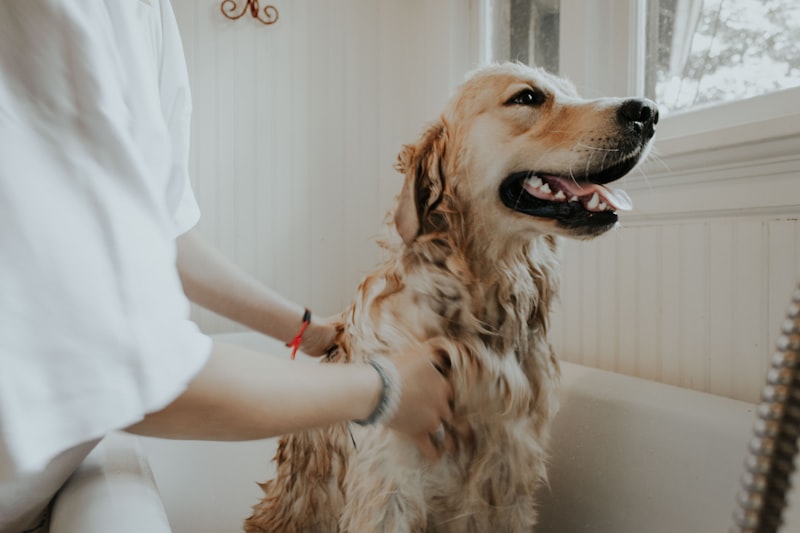
- Pre-Bath Brushing (Mandatory): Always comb through your dog’s entire coat prior to applying a single drop of water. Wetting knotted hair causes tangles to shrink and solidify into unyielding, painful felt mats.
- Ear Protection: Place a cotton ball loosely at the entrance of each ear canal to block water infiltration, the leading cause of bacterial ear infections.
- Lukewarm Temperature Control: Canine body temperature runs around 101.5°F, but their skin is extremely sensitive to heat. Test water on the inside of your forearm; it should feel pleasantly warm, never hot.
- The Triple Rinse: Spend three times longer rinsing than lathering. Lingering shampoo residue trapped next to the skin is the primary cause of post-bath scratching and dandruff.
- Safe Drying: Squeeze moisture out with microfiber towels. If using a blow dryer, utilize strictly the “Cool” air setting and keep the nozzle 12 inches away to avoid thermal burns.
Understanding Canine Sebum: The Natural Defense Barrier
At the base of every canine hair follicle lies a microscopic sebaceous gland that secretes sebum—a rich, complex lipid mixture of fatty acids, squalene, and cholesterol esters. This natural oil travels up the hair shaft, coating the fur in a waterproof sheath that repels moisture, traps body heat, and inhibits fungal spore germination.
When you bathe a dog with detergent-based soaps every week, you strip this protective lipid barrier faster than the sebaceous glands can regenerate it. In response, the skin either dries out completely—producing flaky pruritic dandruff—or undergoes reactive seborrhea, over-producing greasy, rancid oils that cause strong wet-dog odors.
Frequently Asked Bathing Questions:
Q: What should I do if my dog rolls in mud between bath cycles?
Let the mud dry completely! Mud naturally clings to the outer hair guard coat. Once dry, 5 minutes of vigorous brushing with a slicker brush will cause the dry dirt to crumble away effortlessly without needing a full water bath.
Q: Can I use human baby shampoo on my puppy?
While baby shampoo is formulated not to sting eyes, its pH is balanced around 5.5 to 6.0 for human infants. Repeated use will disrupt the neutral 7.0 pH of canine skin, making puppies susceptible to demodectic mange and bacterial folliculitis.
Specialized Bathing Protocols for Skin Allergies & Dermatitis
For dogs suffering from canine atopic dermatitis, environmental pollen allergies, or recurrent hot spots, the rules of bathing change dramatically. In allergic canines, the skin barrier is chronically compromised, allowing microscopic dust mites, grass pollens, and fungal spores to penetrate into deeper dermal tissues.
In these clinical cases, veterinarians recommend medicated therapy baths 1 to 2 times weekly using specialized formulations:
- Chlorhexidine (3%–4%): A broad-spectrum antiseptic that eliminates pathogenic superficial bacterial pyoderma without inducing antibiotic resistance.
- Ketoconazole or Miconazole (1%–2%): Eradicates stubborn greasy Malassezia yeast overgrowth in armpits, groin folds, and paw webbings.
- Phytosphingosine & Ceramides: Bio-identical lipid building blocks that repair fractured cellular stratum corneum walls.
The 10-Minute Contact Rule: Medicated shampoos are not simple wash-and-rinse soaps. You must lather the dog thoroughly and let the shampoo remain on the wet skin for 10 full minutes before rinsing. This allows antimicrobial active ingredients sufficient time to penetrate hair follicles and neutralize pathogens.
The Chemistry of Canine Shampoos: Surfactants & Conditioning Agents
Commercial pet shampoos rely on surfactants—amphiphilic molecules that possess both water-attracting (hydrophilic) and oil-attracting (lipophilic) heads. When lathered into a dirty dog coat, the lipophilic tails bind to grease, environmental soot, and dead skin flakes, while the hydrophilic heads attach to water molecules, allowing dirt to wash away during rinsing.
However, cheap pet grooming products frequently utilize harsh industrial sulfates (such as Sodium Lauryl Sulfate / SLS) that strip protective stratum corneum lipids entirely. Superior veterinary formulas substitute sulfates with gentle, coconut-derived glucoside cleansers (such as Coco-Glucoside and Decyl Glucoside) paired with natural moisturizing factors like colloidal oatmeal and hydrolyzed silk proteins to nourish the coat without irritating ocular or dermal membranes.
Expert Grooming Q&A: Professional Bathing Advice
Q: How can I speed up drying time for dense double-coated dogs?
Invest in a dedicated high-velocity canine force dryer. Unlike human hair dryers that rely on searing thermal heat (which damages canine skin), force dryers blow room-temperature air at 25,000 feet per minute, mechanically blasting water droplets and dead undercoat hair out from the roots in minutes.
Q: What is the best way to wash a dog’s face without getting soap in eyes?
Never spray water directly into your dog’s face with a shower hose or spray nozzle. Instead, dip a soft microfiber washcloth in lukewarm diluted shampoo, squeeze out excess liquid, and gently wipe muzzle fur, eye corners, and chin folds by hand. Rinse with a second cloth dipped in pure warm water.
🐶 Summary: Key Action Steps for Pet Parents
- Adjust bathing frequency based on coat texture, avoiding unnecessary over-washing.
- Always choose veterinary-formulated, pH-balanced dog shampoos with soothing botanicals.
- Brush thoroughly before wetting the coat to eradicate tangles and dead undercoat hair.
- Protect sensitive ear canals from moisture and rinse three times to remove all soap film!